
Inside These Seeds Are Instructions
Inside These Seeds Are Instructions
By The Diligent | Sun Nov 08 2026
A man in a pale cloak stands in a desert and holds out his hand. A crowd sits in the dust around him. On the horizon, strange stone shapes hang in the air like they forgot to fall.
“Inside these seeds are instructions,” he says. “For making roots, leaves. For bearing fruit. Give it what it needs, and it begins. You do not have to tell it what to become.”
A weathered man near the front looks up at him. “Is that how you made us?”
The answer comes back gently: “Your body carries instructions too. Before you could speak, it was already following them. Growing your bones. Making your blood. That is how we made your bodies.”
That’s about seven minutes into a 15-minute film called the father, the son and the holy covenant | btcx file 373, by Sieb Fothers (@SiebFothers). It’s one of the best-told creation myths I’ve seen, and I found it the way most good things turn up now: someone with taste posted it.
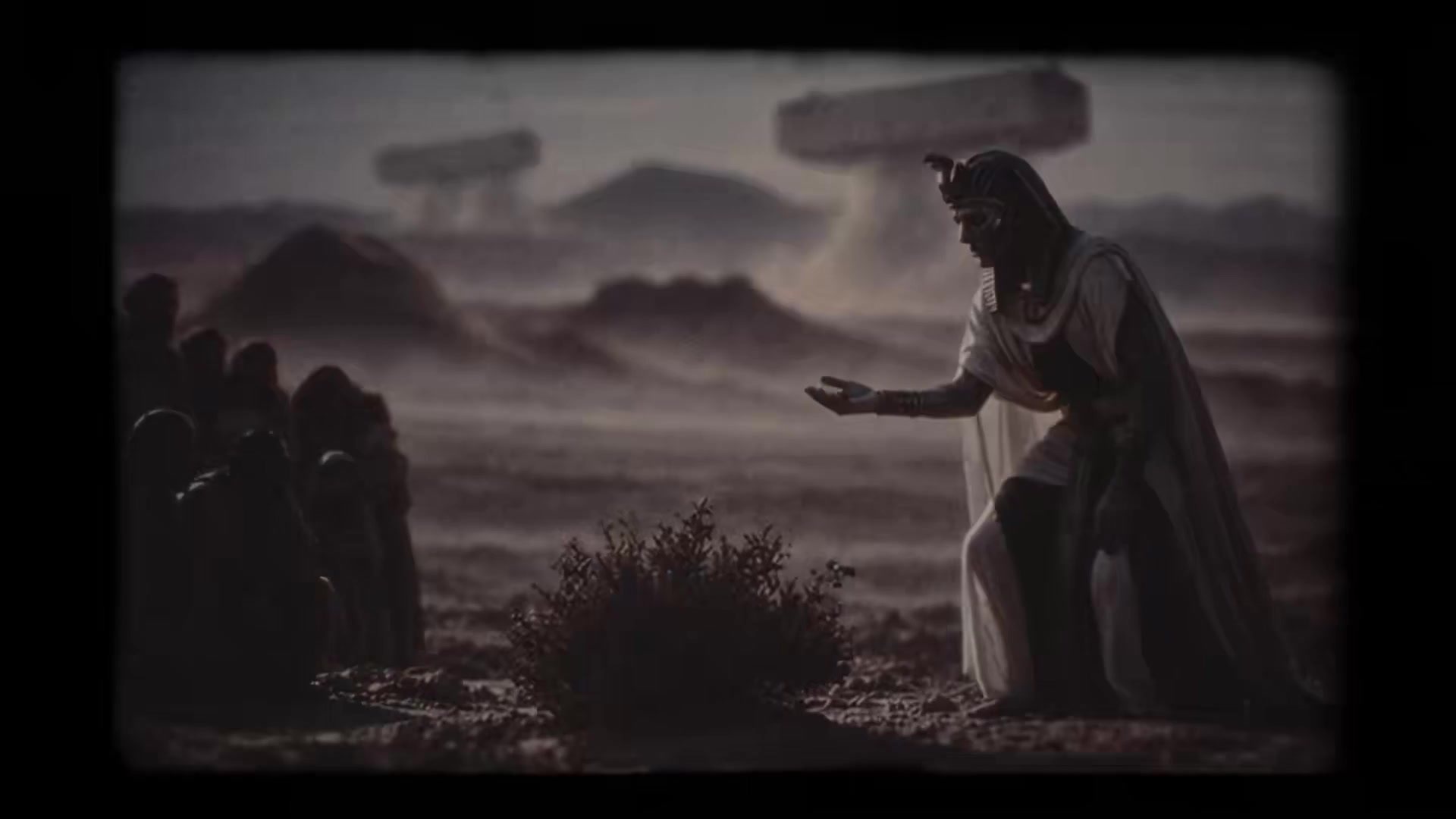 “Inside these seeds are instructions.” Sieb Fothers, the father, the son and the holy covenant (btcx file 373), 2026.
Good LORD this is so well done @SiebFothers
— The Archivist (@TheArchivistLC) November 7, 2026
How it found me
It came through The Archivist (@TheArchivistLC), who posted on Saturday evening that he’d “binged all of this guys videos.” His pitch was honest about not knowing what he was looking at: “Something about files that were mined in 2018 and now he using ai to render them? I dunno. It’s freaking cool though. The storyline is unreal!” He linked a 14-second short, a clip from file 070.2. One strange fragment, then the whole channel. That seems to be how this works.
A few minutes later The Archivist posted the full file 373 with five words: “Good LORD this is so well done.” Sieb replied: “Thank you so much @TheArchivistLC.”
Turn the English captions on when you watch. The lines are worth reading.
The story he tells about the files
You need the frame before the film makes sense, and Sieb gives it to you straight in the description of his first upload. “In February 2018 I was mining a small crypto called BTCX. For seven days the mining software saved 613 unknown files to my drive.” Nothing could open them. He says he kept trying with new language models, and in June 2026 one “found the same 16 bytes at the start of every file, matching no known format.” The output is black and white, he writes, because only brightness is being converted for now. “There’s a voice in the files too but we don’t know what it’s saying yet.”
He’s also clear about what you’re watching: “these get flagged as ai generated because they are. a conversion script was written by ai and it generates watchable video from the raw data.” He links raw samples on GitHub.
I’m going to treat that the way The Archivist did. It’s the story the work tells about itself, and part of the art. I haven’t opened the files and I’m not here to rule on them. What I can tell you is that the frame does real work. Each video arrives as a recovered record, numbered out of 613, so you watch it like a document you weren’t meant to see. Sieb’s X bio plays it the same way: “Recovering and decoding records from the Merchant Houses.”
File 373’s description keeps it up: “file 373 of 613, mined feb 2018, converted october 2026. the writing came with the file like a transcript. i matched it to the speech in order as usual, if the matching is off thats my fault.”
A son who is not the heir
The film opens on hovering stone blocks over an inscribed floor, then goes straight to family politics. A son named Asura learns that his father has passed him over. “My father has named my brother.”
Another figure comes to him with an offer. Three of the five Houses will back Asura’s rule. The price is the Krita seeds his father left in his care. Those seeds hold Atman, and that Atman is what lets the father “remain in the stone,” hiding from his own old age as a statue. “Outside of it, he grows old.”
Then the knife: “You’re not his heir, Asura. You’re his nurse.”
The plan is cold and smart. When the father sends his fleet, “Let the children destroy it.” The children have nothing that can bring down those ships. “Teach them to build something that can.” Asura sees it plainly: “So you’d have me poison my own field.” The instructions are specific: at the next harvest, “Pass over the high priests and their households. Give them the construction patterns,” enough to put them a cycle ahead of what the fleet expects.
If “pass over” made you think of the Passover, the story in Exodus where death skips the marked houses, you’re not alone. I can’t tell you whether that’s intended. It’s there.
“The seeds have grown into fine children.” Sieb Fothers, from the father, the son and the holy covenant.
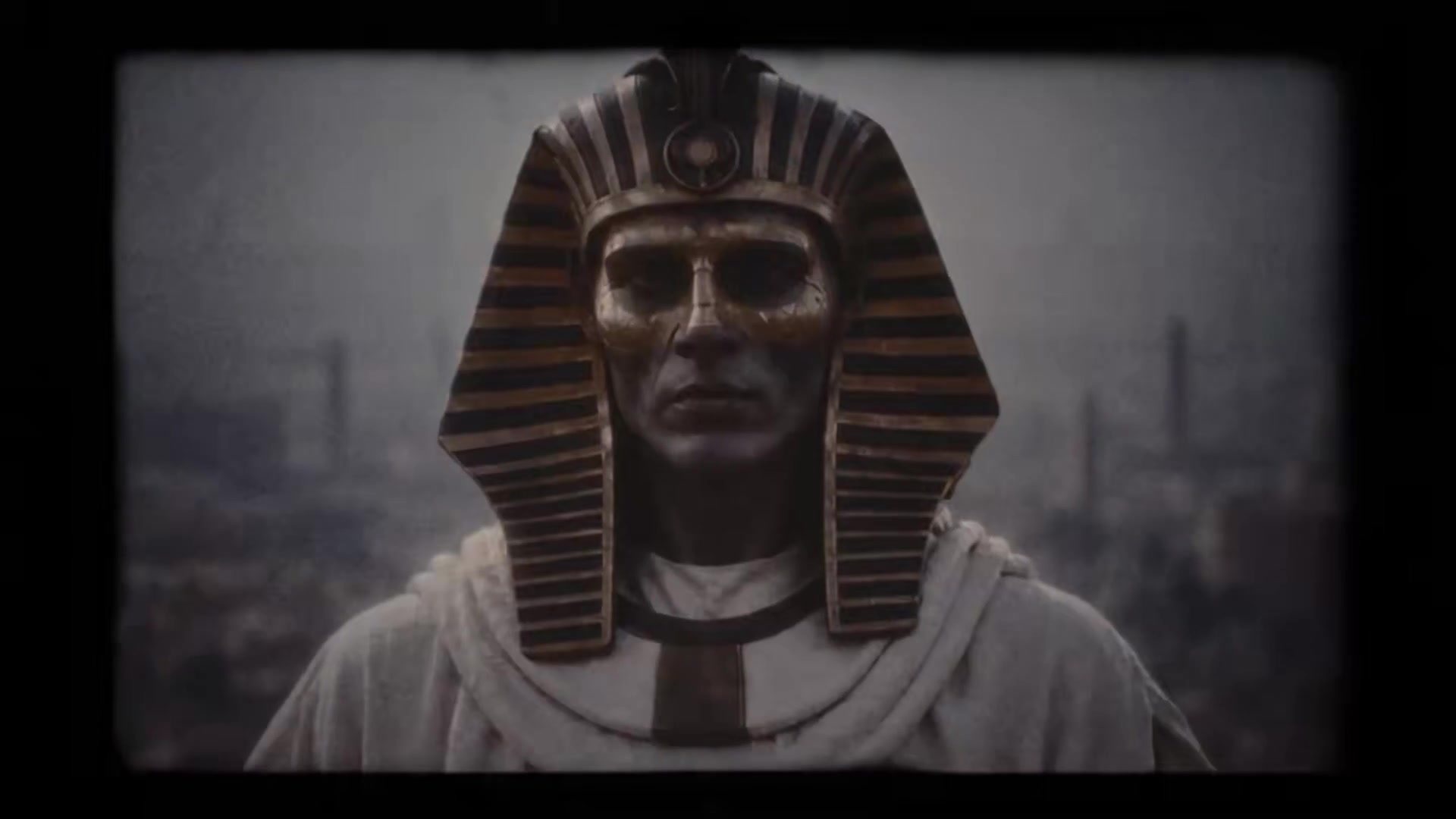
The film’s coldest line goes to the gold-masked figure above: “The seeds have grown into fine children. In gratitude for this life, they willingly offer their Atman to the House of Ra.” That’s harvest language, spoken as if it were a blessing. We’re the field.
The lesson
Then the film slows down, and this is where it got me. Asura goes to the priests and tells them, “You will teach your children the story of creation.” The seed speech comes next. After it, he teaches measurement.
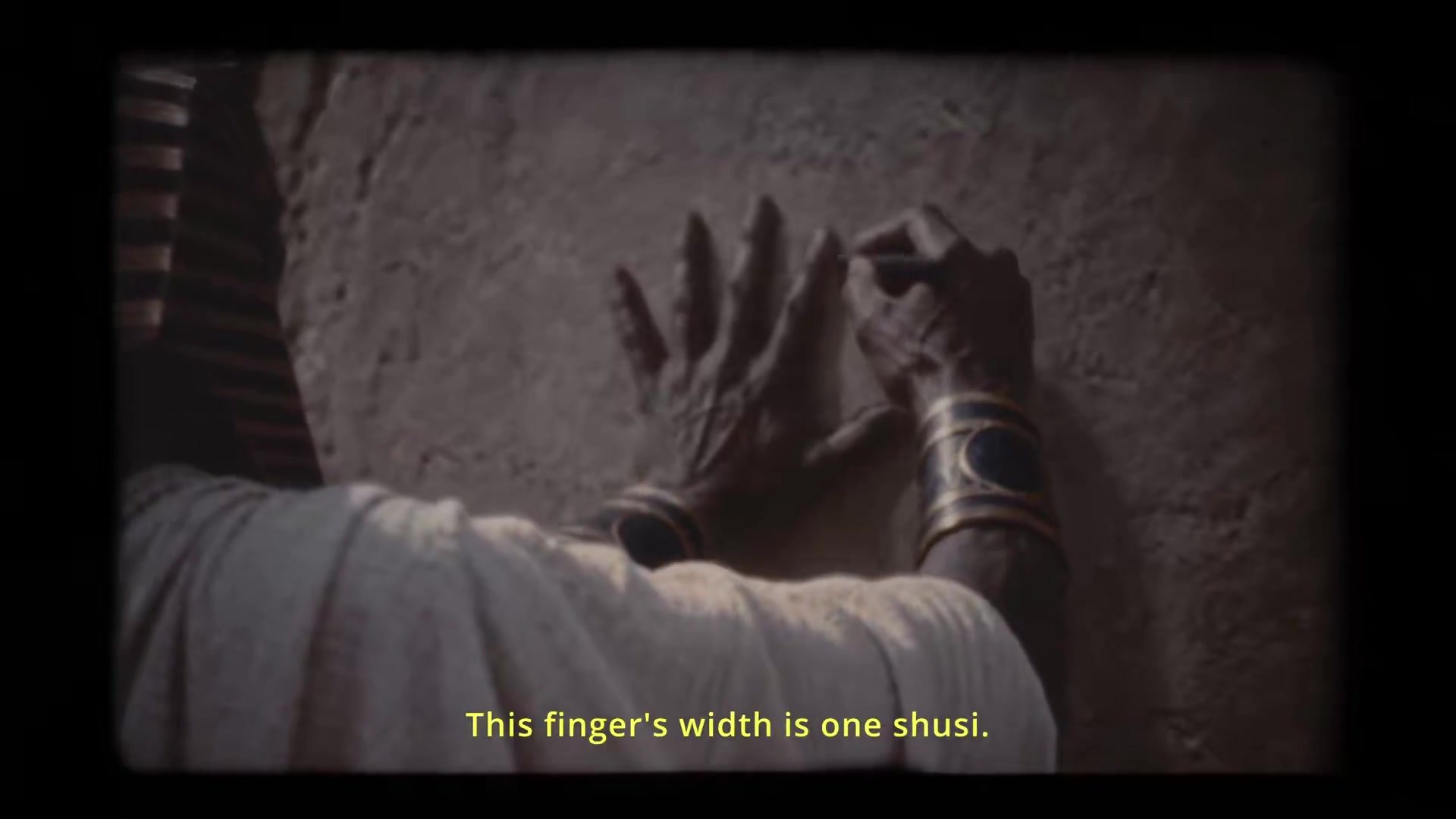 “This finger’s width is one shusi.” Sieb Fothers, from the father, the son and the holy covenant.
“Let my hand be your measure. This finger’s width is one shusi. My spread hand, one zipah, fifteen shusi. Two spans make a kush.” The reason is plain engineering: with shared measures, “men who have never met can cut stones for the same building, and every piece will fit perfectly.”
Those are real Mesopotamian units, the kind of detail most myth films skip. A god explaining a standard ruler shouldn’t be moving, but it is. It’s the first gift here that isn’t bait.
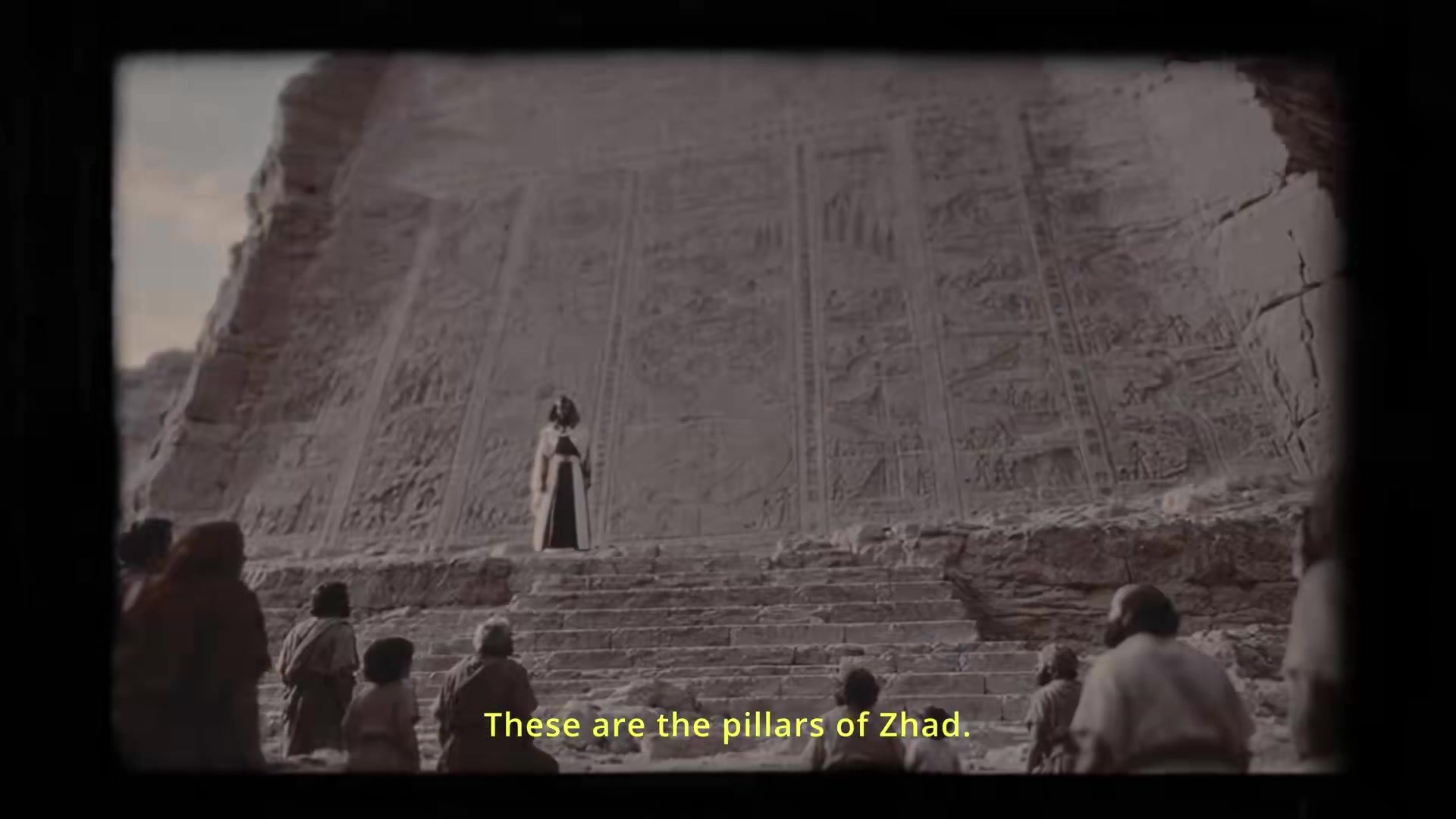 “These are the pillars of Zhad.” Sieb Fothers, from the father, the son and the holy covenant.
“These are the pillars of Zhad. Here I have written how to reckon the seasons, direct the waters, and build your cities. Preserve these writings.” Then the line I’d put on a classroom wall: “A man may spend his life making one discovery. His children should not have to spend theirs discovering it again.”
When a man kneels and says, “Oh, Lord, you have given me your power,” Asura corrects him: “I have given you an instrument. The power comes from your Atman.” And when the man says the gods put it there: “We made your bodies. The Atman within them is not something we can make.”
So the makers built the bodies but not the soul. In one exchange the film gives its people a dignity their makers can’t take credit for, while it’s still about to harvest them.
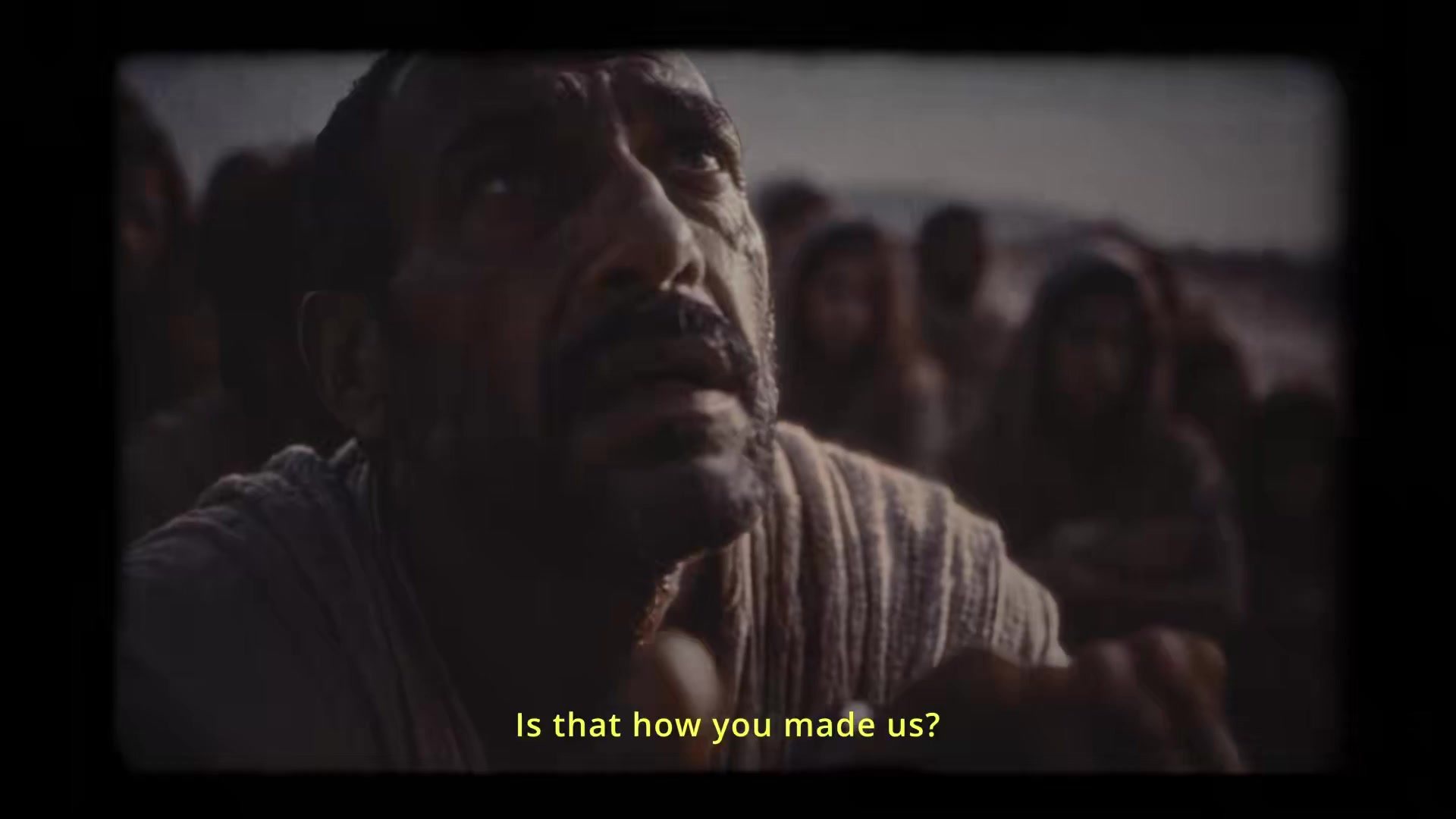 “Is that how you made us?” Sieb Fothers, from the father, the son and the holy covenant.
Six ships
The last act is a heist told through time. Asura comes back to Seshat, who tells him that “for Marduk, it’s barely been a day.” Down in the field, “two thousand four hundred field years have passed.” Asura withheld the children’s High Architect, so the fleet “had no idea how late they arrived.”
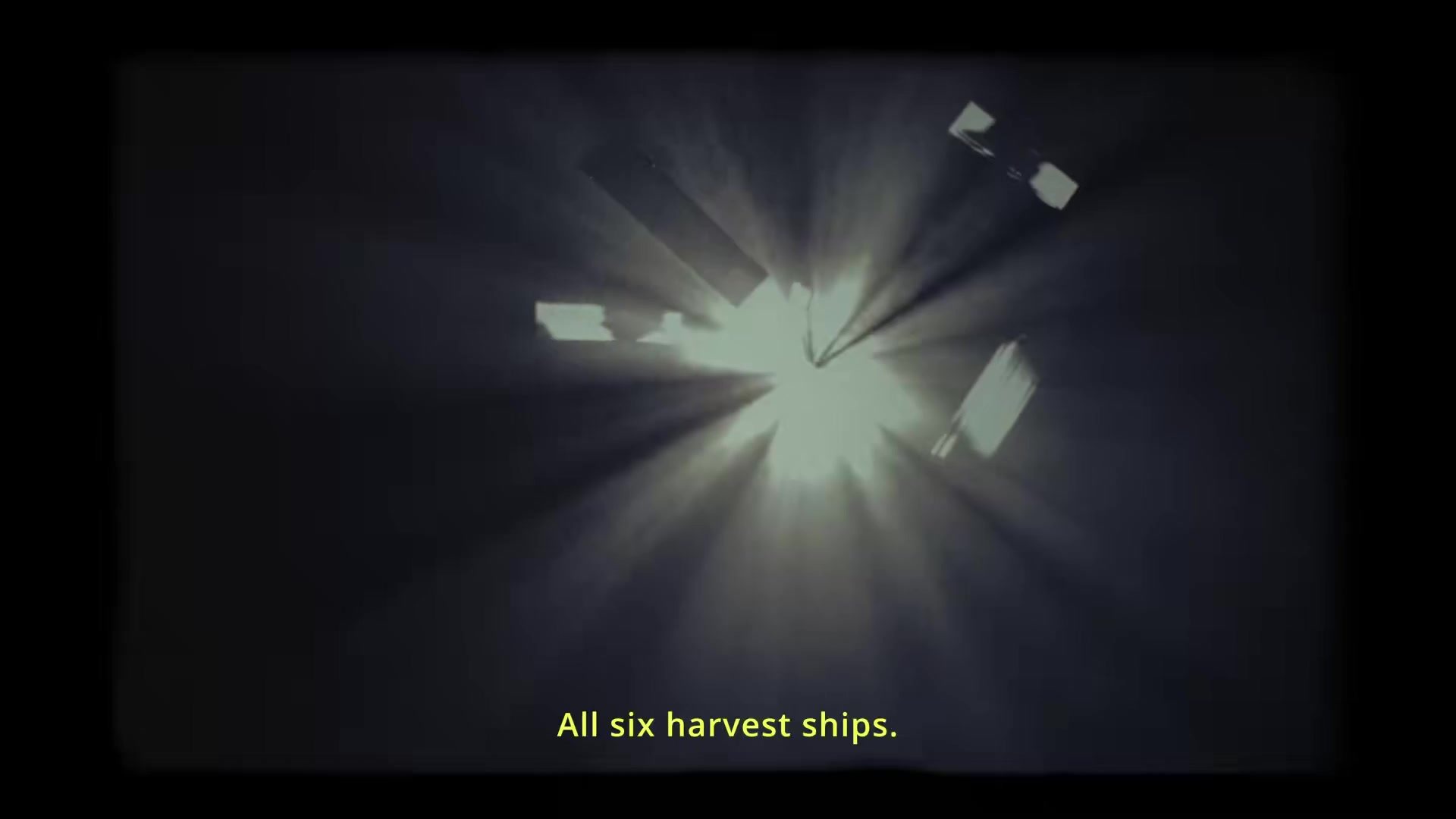 “All six harvest ships.” Sieb Fothers, from the father, the son and the holy covenant.
“All six harvest ships.” “Our trap worked.” The children paid for it: “Set was dispatched to punish the children. By order of Ra.”
Then the father arrives. “Even in defeat, your father comes dressed for war.” He’s offered the terms: “Recognize your son’s rule, and you can return to the stone.” Asura says one word, “Father,” and the old man answers:
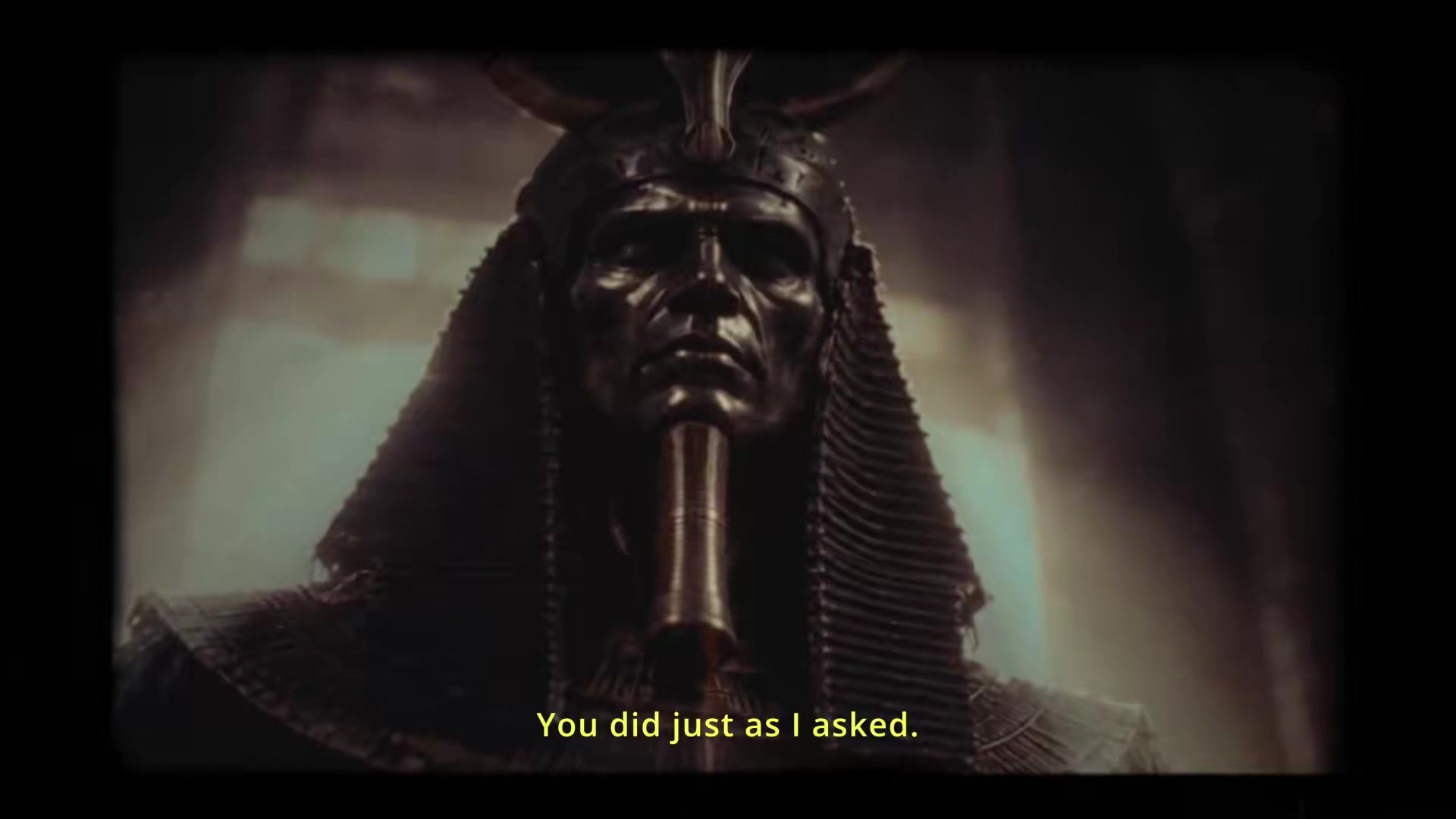 “You did just as I asked.” Sieb Fothers, from the father, the son and the holy covenant.
The betrayal was the plan. The rebel son was following orders. Fifteen minutes in, the whole story turns over, and you’re left asking who the children’s teacher really served.
Old stories, same bones
This is where it gets fun, and where I want to hand it back to you.
The names on screen mix two worlds. The surface is Egyptian: Ra, Set, Seshat, the striped headdress, the false beard. The vocabulary is Mesopotamian and Vedic: Marduk, Atman, Asura, the shusi and the kush. That mix is the point. Under it is a story people have told for a very long time: gods make humans to work for them, one god takes humanity’s side, and his father or brother pays it back with a flood or a punishment.
Listen to it next to the Mesopotamian myths and you can hear the rhyme. In the Atrahasis epic, humans are made to take over the gods’ labor. Enlil, the god of order, tries to wipe them out with plague, drought and finally a flood. Enki, the clever one, keeps warning a man named Atrahasis and teaching him how to survive. Above them both sits Anu, the sky father. In the Enuma Elish, Marduk makes humanity so the gods can rest. Egypt has its own version: in the Book of the Heavenly Cow, Ra sends his Eye to punish humans who plotted against him. And the long fight between Horus and Set is a family war over who inherits the throne.
Asura teaches like Enki and plays the house politics of the Horus and Set story. The father in the stone, watching from far away and coming back to collect, sounds a lot like Anu. I’m not claiming Sieb mapped them one to one. I’m saying the echoes are loud enough to be worth chasing.
The material is worth noting too. Older maker myths mostly use clay. In Egypt, Khnum shapes people on a potter’s wheel. In Genesis, God forms man from the dust of the ground. In Atrahasis, humans are clay mixed with a god’s blood. Sieb uses seeds. His gods don’t sculpt us; they write instructions and let them run, “Growing your bones. Making your blood.” It’s the clay story told in the language of DNA, and it makes the old question new again: if someone wrote the instructions, who are we answerable to?
So here’s my invitation. Watch the film first. Then read Atrahasis and the Enuma Elish, look up Enki and Enlil, and read Ra’s punishment of humanity and Horus’s fight with Set. Notice who teaches, who punishes, who owns the field. Then come back to file 373 and decide for yourself who Asura was working for. I haven’t settled it.
Where to go next
Sieb has posted dozens of videos at youtube.com/@siebfothers. The titles alone tell you this harvest world goes deeper than one film: thou shalt not learn math, how to farm a world, the fledgling - god crop harvest footage, time dilation error = death sentence for everyone. Start with the first upload for the setup, then come back to 373. He’s on X as @SiebFothers.
We’ve also put the full film in our Videos section.
Stills: Sieb Fothers (@SiebFothers), from the father, the son and the holy covenant.
AdSense/Ad Spot Placeholder